Learning
by Languages®

publishing series

You can explore our unmissable catalog of books, where we have collected some of the best experiences in contemporary and innovative education.

Linguaggi in Ricerca (Languages in Research)

The Learning by Languages® series “Linguaggi in Ricerca” aims to promote and spread a vision of contemporary and innovative education and teaching, grounded in pedagogical research and experimentation.

Our publications blend theory with practical educational work in nurseries and preschools, giving special emphasis to expressive and communicative languages as essential elements of knowledge.

Title from "Linguaggi in ricerca"

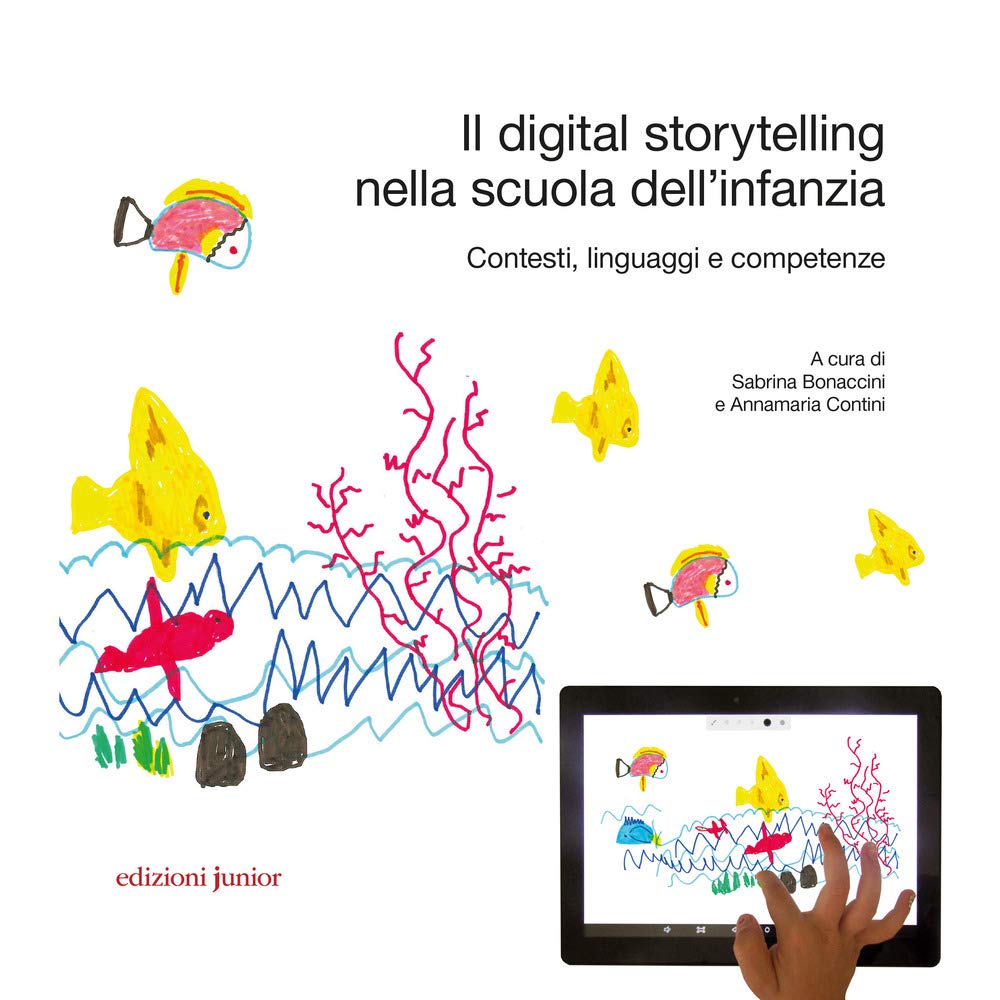
Discover how digital storytelling can enhance digital skills in young children. This book offers both theoretical and practical insights into integrating digital storytelling into educational pathways, supporting teachers in adopting innovative methodologies. With reflections and practical suggestions, the volume explores the potential of this approach, the skills it develops, and strategies for designing effective activities. An ideal starting point for educators, pedagogists, and students interested in the topic, complete with online updates and practical tools.
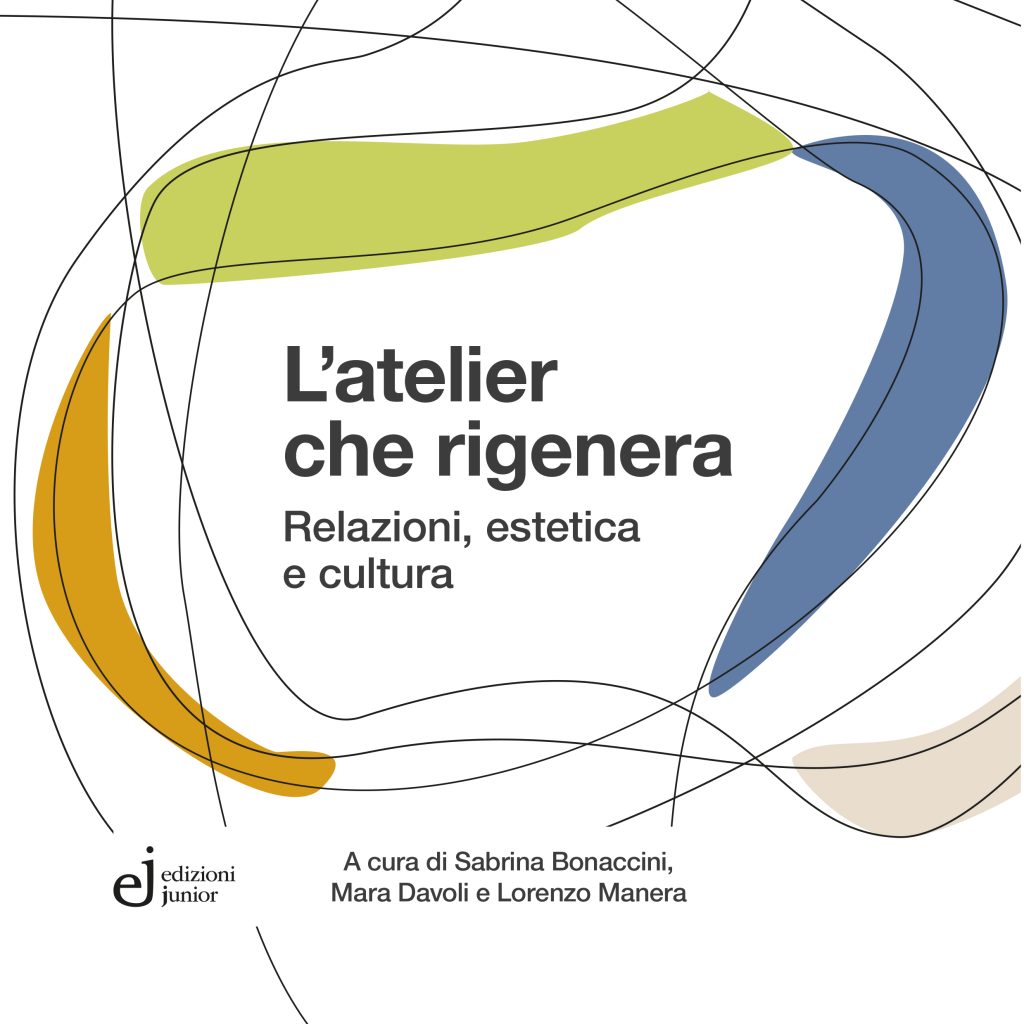
This book explores the value of the atelier in early childhood educational services, highlighting the atelierista’s crucial role in enriching the educational offering. The proposed educational approach emphasizes creativity, multiple forms of expression, and interdisciplinarity, breaking away from predefined patterns and nurturing imagination in both children and adults. With theoretical reflections and practical examples, the book invites educators, atelieristas, and pedagogists to reflect on the role of the atelier in promoting quality experiences and offers suggestions for further online exploration.
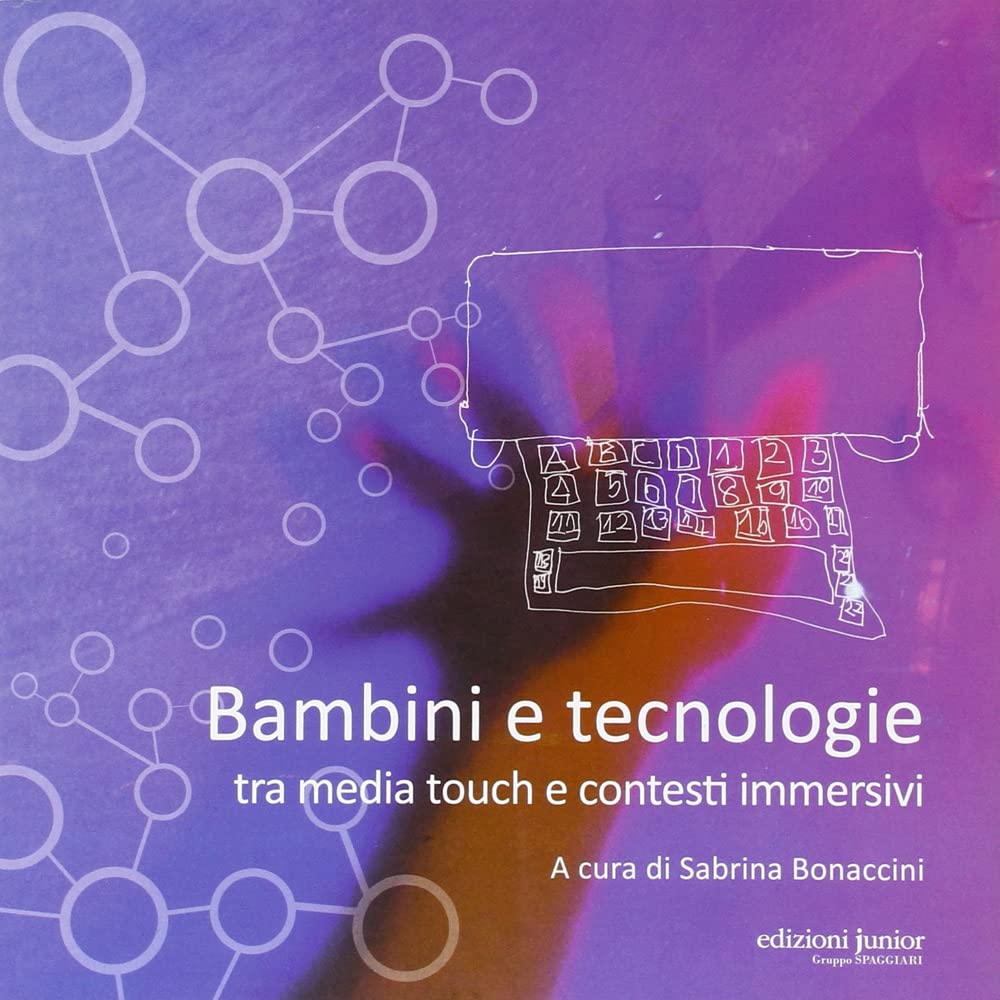
In an era of rapid technological change, this book offers an in-depth reflection on how to integrate technology into children’s learning, moving beyond the simplistic “for or against” debate. It proposes a pedagogical vision that goes beyond passive device use, advocating a conscious and intentional approach to developing digital skills from the earliest years. With both theoretical insights and practical suggestions, it explores how to create “digitally enhanced” learning environments and provides tools for educators and parents, inviting reflection on digital literacy in early childhood educational contexts. An ideal resource for understanding the role of technology in modern education.
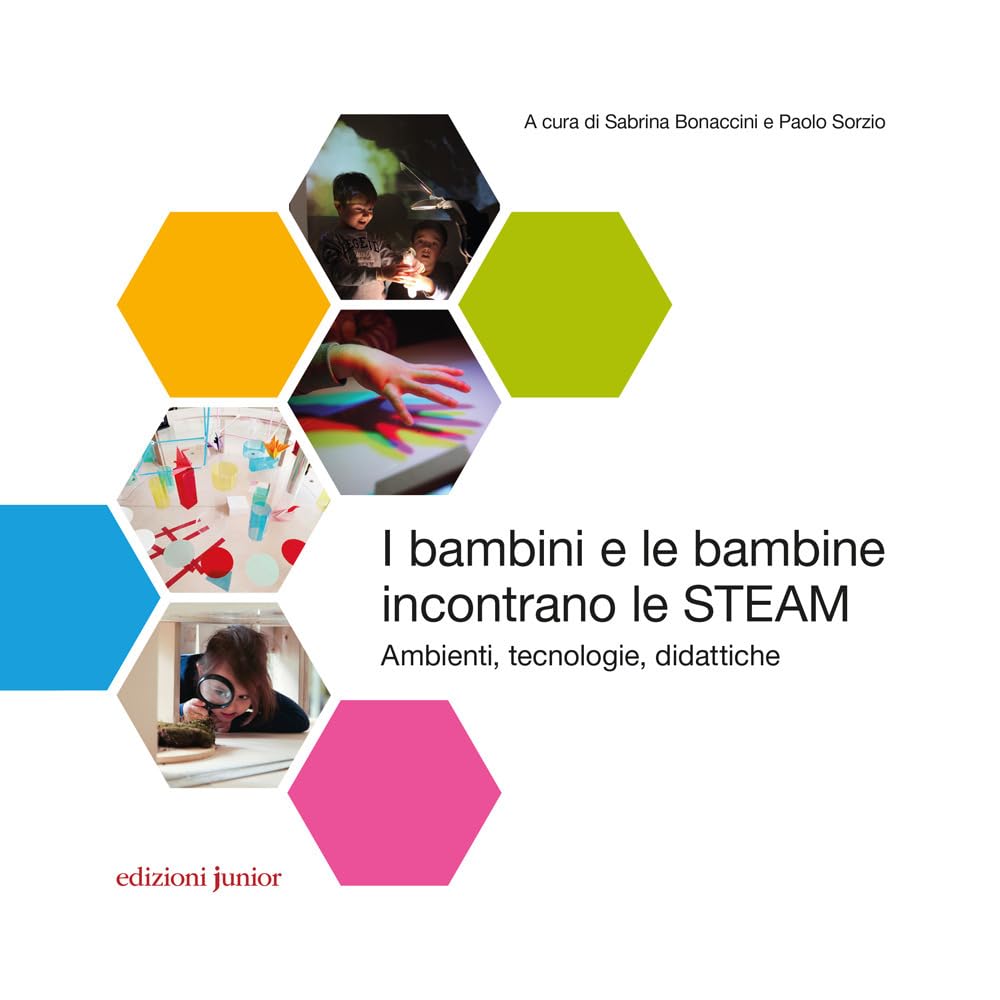
How can we introduce children to STEAM disciplines from early childhood? This book offers a practical and inspiring approach, combining a solid theoretical and methodological foundation with numerous hands-on activities to explore science, technology, engineering, art, and mathematics. It’s an opportunity for educators, pedagogists, and early childhood professionals to rethink learning spaces and stimulate creativity, critical thinking, and collaboration in young children. A journey through ideas, projects, and educational scenarios designed to nurture curious minds open to the future.
What is the power of materials and spaces in early childhood education? This book explores how carefully designed environments and meaningful materials can become true mediators of creative and profound learning. Through theoretical reflections and practical proposals, the volume invites educators, atelieristas, and designers to rethink educational environments as living, stimulating spaces capable of inspiring inquiry, play, and imagination. A journey through aesthetics, pedagogy, and design to redefine the quality of the educational experience.
When is the right time to start learning a foreign language? This book confidently answers: from the very first months of life. Aimed at educators and professionals working in 0–6 services, it blends theory and practice to explore how to introduce English in educational contexts from as early as three months of age. Through innovative pedagogical approaches and many real-life experiences, the book demonstrates how to create stimulating environments that emphasize musicality, play, and relationships, laying solid foundations for natural and lasting language learning.
How can we introduce children to scientific thinking from an early age? This book proposes an educational journey through nature, sensory experiences, and discovery, offering theoretical tools and practical activities to create environments that foster curiosity and observation. Through concrete teaching suggestions, educators and teachers can support the development of scientific and ecological thinking in children, nurturing their innate desire to explore the world. A perfect resource for those who believe in the power of wonder as the engine of learning.
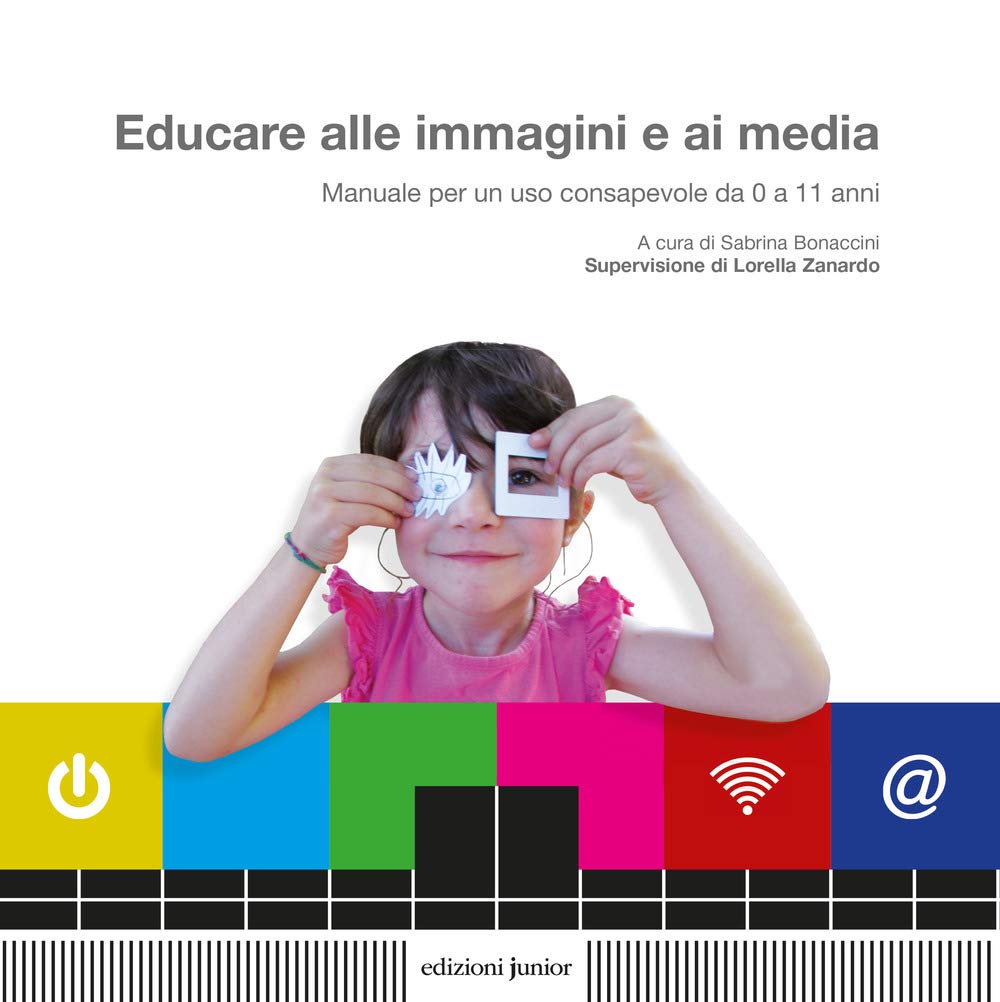
In a world dominated by images, teaching children to read and interpret them consciously has become essential. This book guides educators, teachers, and parents in introducing children aged 0 to 11 to a critical and active use of media. Intertwining neuroscience, visual culture, and teaching practices, it offers both practical pathways and theoretical insights for responsible and mindful visual education. It also includes additional digital content for an enriched, multimedia learning experience.
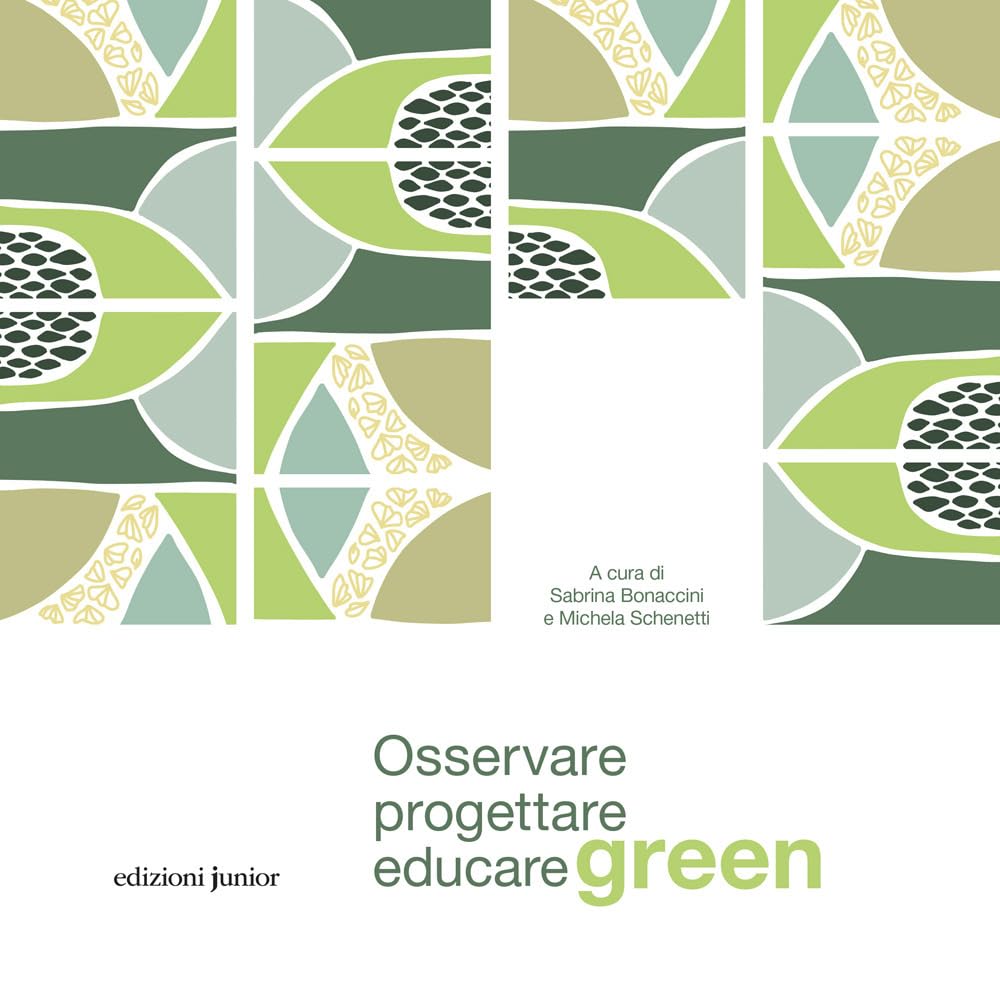
This book invites educators and teachers to move beyond spontaneous approaches and intentionally design ecological experiences for young children from the earliest years. Observation becomes the starting point for developing everyday ecological thinking, integrating nature and learning in both outdoor and indoor environments. Teaching pathways, methodological tips, and a biophilic vision of education provide a practical and inspiring guide for preparing future generations who are attentive to our planet.
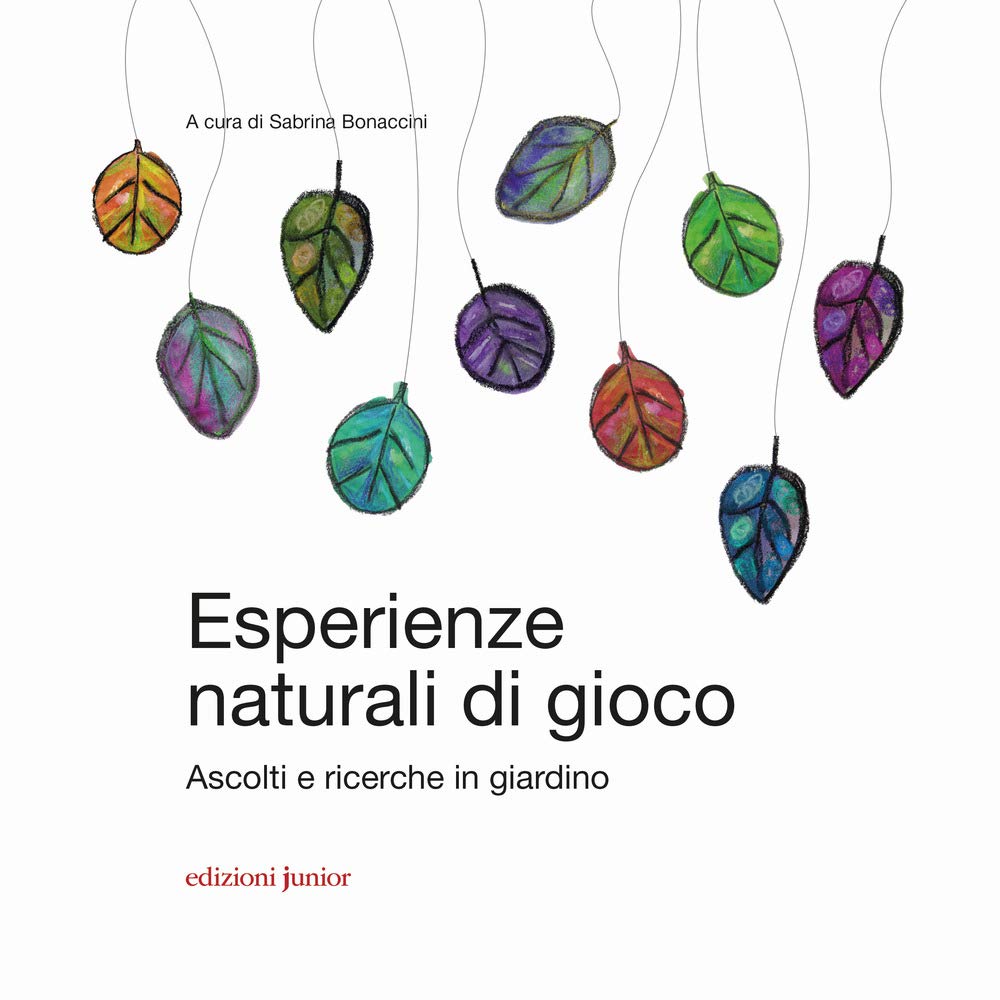
This publication guides educators and families in discovering the educational value of natural spaces. Outdoor play becomes an opportunity to develop ecological thinking, explore biodiversity, and build a genuine connection with the environment. Theory and practice intertwine to provide practical tools and a shared ethical vision, with educational proposals that also include digital content for deeper exploration. It’s an invitation to rethink outdoor education as a growth experience for both children and adults.
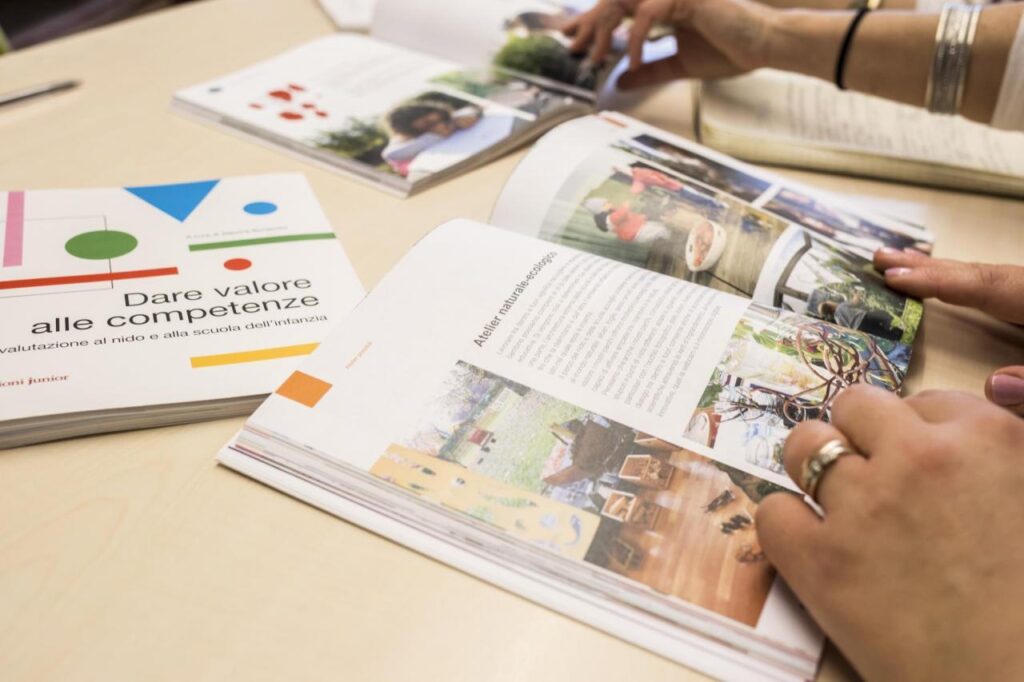
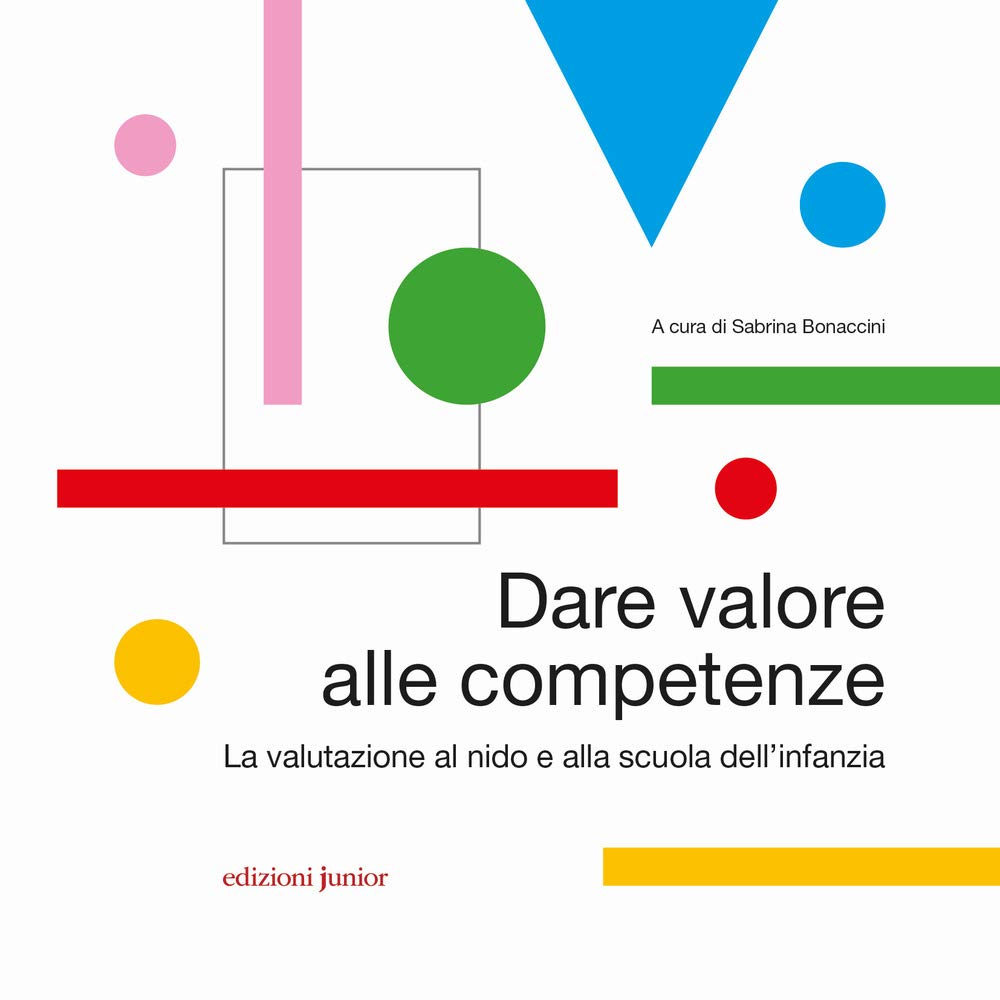
This book addresses the topic of assessing competencies in 0–6 educational services, offering a socio-constructivist perspective that recognizes the complexity of learning processes. Assessment is not merely an act of measurement, but an opportunity to support children, teachers, and families in continuous improvement and educational quality. With an innovative perspective, the book provides both theoretical insights and practical ideas for responding to current assessment challenges, encouraging the experimentation of new methods that promote constructive dialogue within the preschool education system. An excellent read for educators, pedagogists, and families interested in better understanding this sensitive topic.
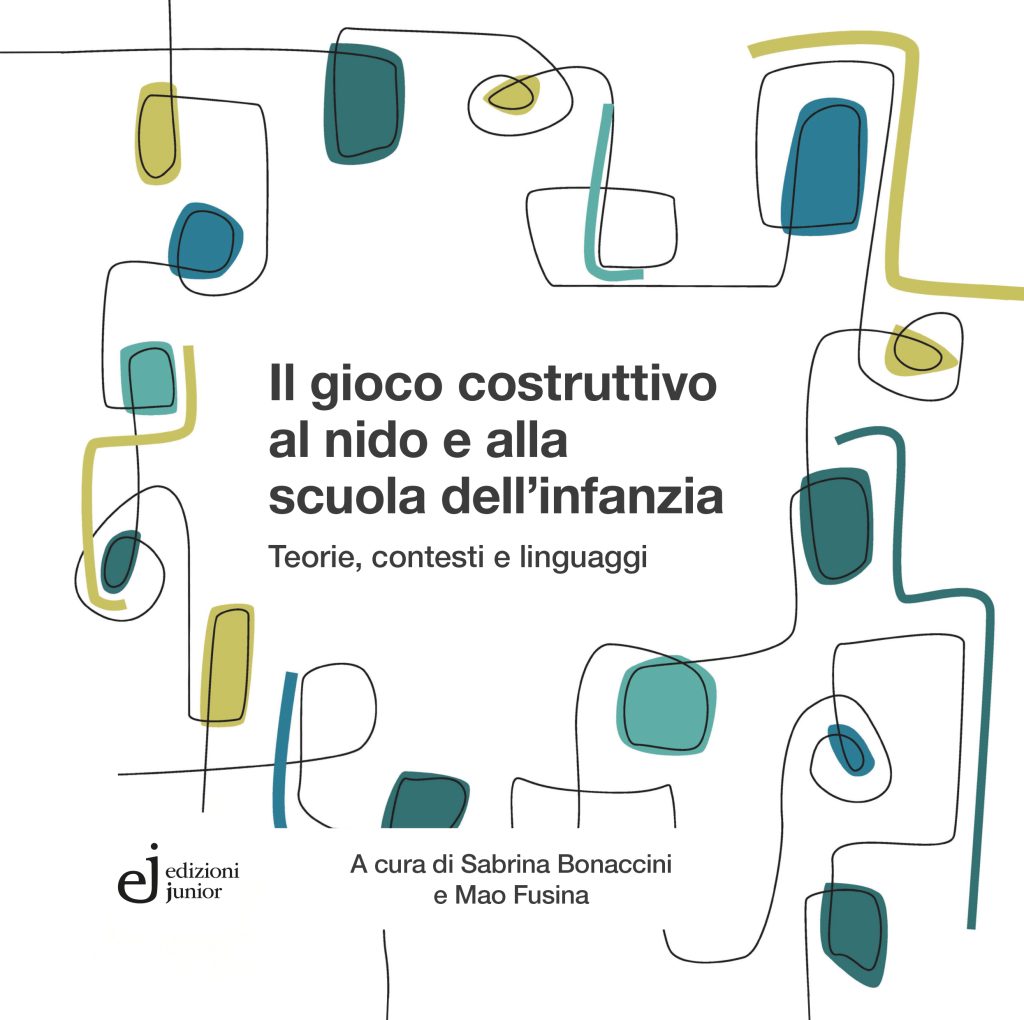
This volume explores the pedagogical significance of constructive play in the 0–6 age range, highlighting its value as an integrated developmental device. Constructiveness engages sensory, cognitive, motor, and relational dimensions, connecting thought, emotion, action, and language. Through a theoretical reflection and numerous practical insights, the text examines the role of space, materials, and educational guidance in creating contexts that foster logical-mathematical thinking, creativity, and divergent thinking. Constructive play is presented as an evolving process that leads from manipulation to the intentional production of meaningful “artifacts.” Addressed to teachers, atelieristas, pedagogists, and researchers, the volume provides tools for designing learning environments that support autonomy, self-regulation, resilience, and language development.
In a rapidly transforming educational landscape, the atelier is reaffirmed as a strategic setting for fostering creativity and divergent thinking. This volume offers a renewed perspective on the role of the atelier and the atelierista, examining their capacity to generate plurality, connections, innovation, and social impact. Through theoretical contributions and practical perspectives, the text explores the potential of the atelier as an educational, social, and cultural practice capable of influencing local contexts and communities beyond the traditional boundaries of early childhood centers and schools. The atelier is presented as a space for research, aesthetics, and knowledge construction, able to activate inclusive processes and shape new cultural policies in education. The volume is intended for teachers, pedagogists, atelieristas, and researchers interested in rethinking the atelier as a generative space for transformation.
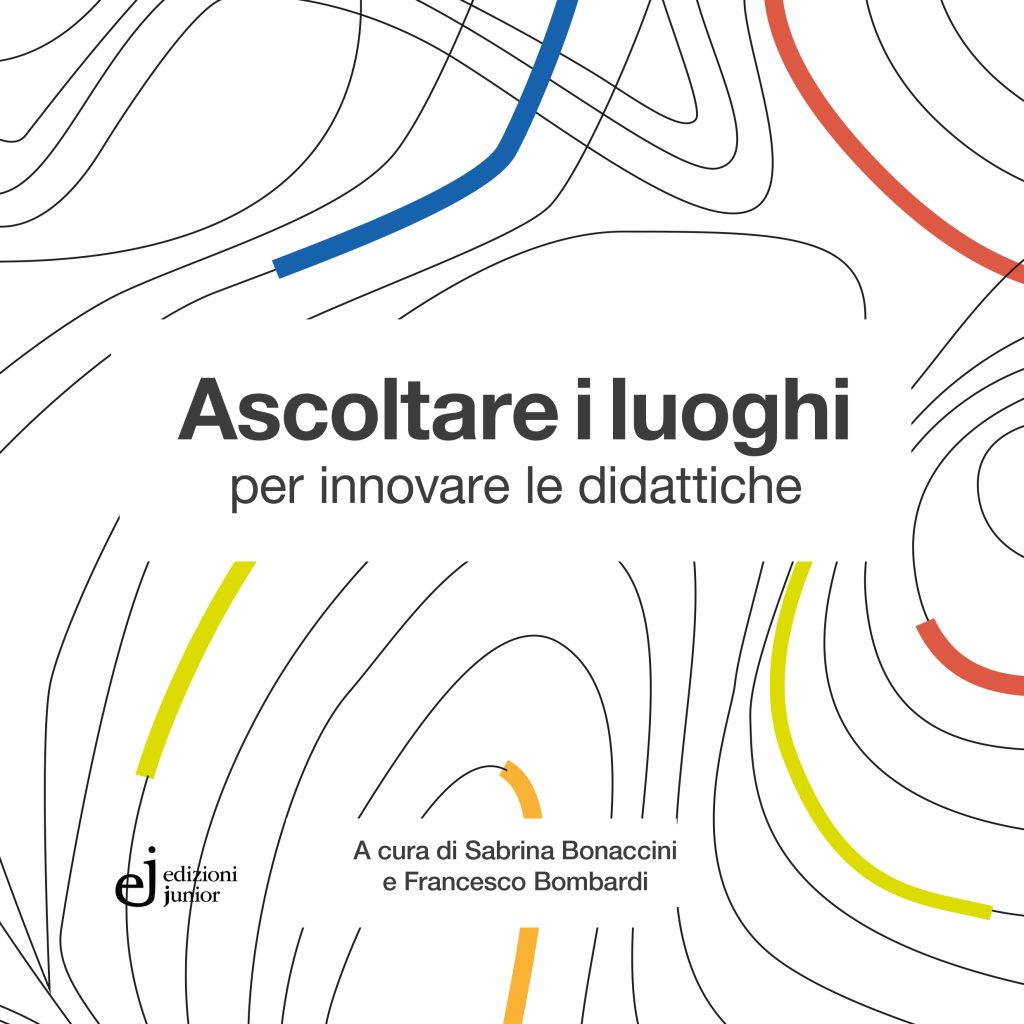
This volume is situated within the framework of place-based education, offering a reflection on the importance of learning to listen to places as a fundamental dimension of educational design. Places are not merely containers, but anthropological constructions rich in meaning and potential. Through a strategic alliance between pedagogy and design, the text provides theoretical and practical tools for observing, interpreting, and reimagining educational environments. It proposes a transformative training methodology that encourages moving beyond the passive use of spaces, cultivating instead an attentive, sensitive, and multisensory perspective. Addressed to teachers, pedagogists, atelieristas, architects, researchers, and designers, the volume offers interpretative keys to innovate teaching practices and learning environments, transforming encounters with places into generative experiences of knowledge.

Learn&Play

The “Learn&Play” series includes books and educational tools by Learning by Languages®, designed to support the educational relationship between adults and children.

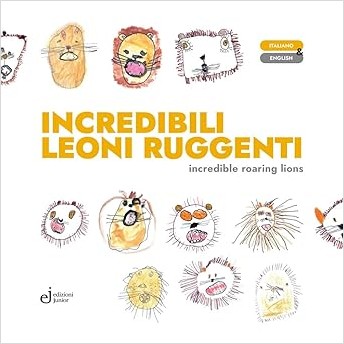
The first title published is the book-game “Incredible Roaring Lions,” inspired by experiences and activities born within educational services, now transformed into a project aimed at a broader audience, including families.

See the Learn&Play Educational Tools

Incredibili leoni ruggenti
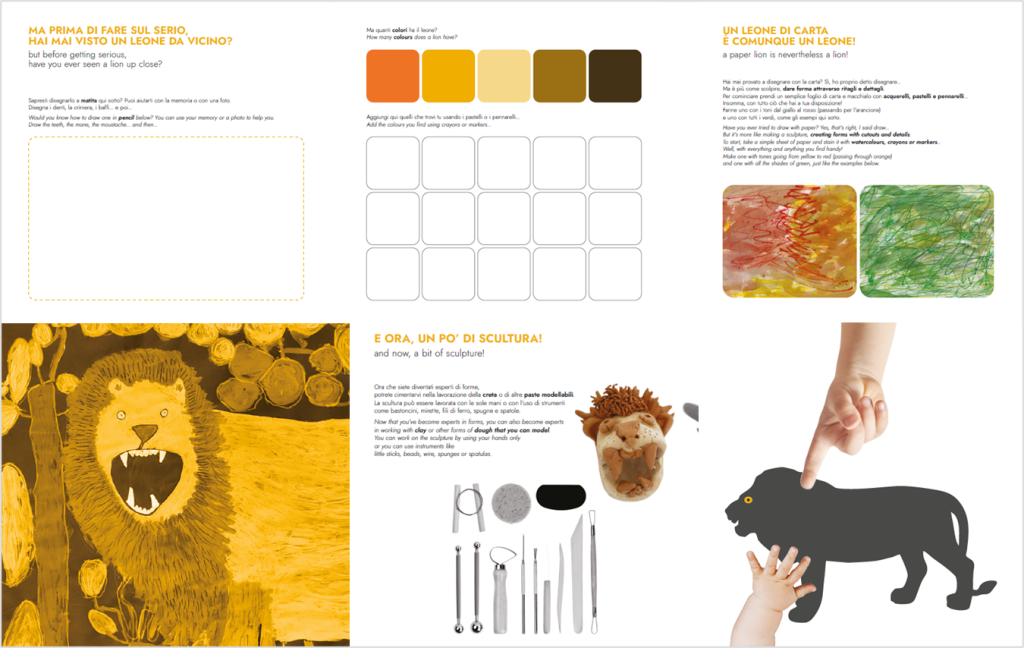
From experiences conducted in schools and nurseries, this book encourages creativity through play, movement, and hands-on activities. What can a lion’s roar be? It can be a pencil drawing, watercolor, tempera painting, collage using recycled materials, or even a sculpture made of clay. A lion’s roar can also become a story told through photos, or expressed through jumping, running, touching, and… pawing! Incredible Roaring Lions offers games and activities for parents, educators, and teachers who want to turn children’s curiosity into a creative adventure.
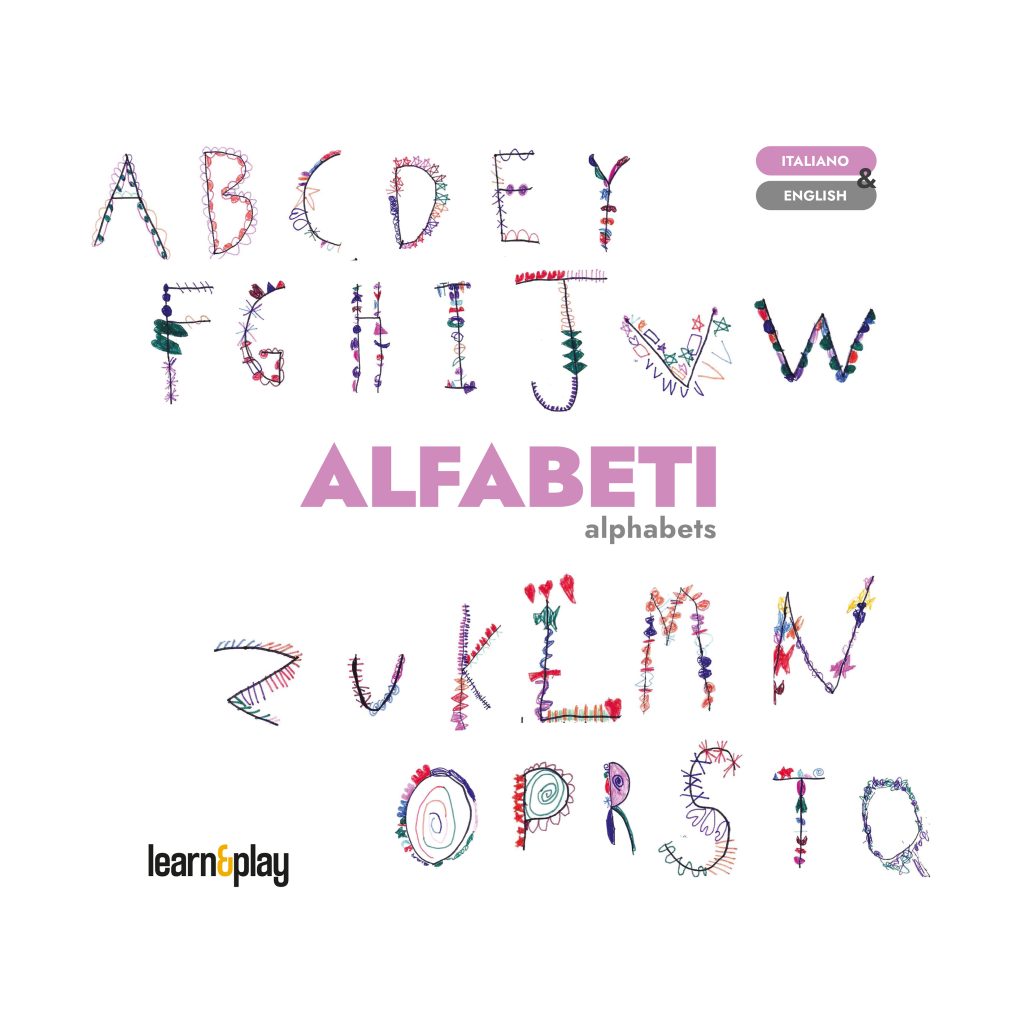
Alfabeti is a journey into the world of letters that invites children to question the meaning and function of the alphabet, transforming the learning of writing into an experience of active inquiry. The volume proposes a socio-constructivist approach that brings together historical, symbolic, and graphic dimensions: letters are presented as evolving signs, originally connected to figures and images, opening up space for reflection on the cultural origins of writing. The suggested activities encourage experimentation with different forms of handwriting—cursive and print, uppercase and lowercase—and guide learners from the letter to the word within a workshop-based and metacognitive framework. Designed for preschool and primary school teachers, the text supports a language pedagogy that values curiosity, graphic awareness, and the progressive construction of meaning, promoting a reflective and creative approach to learning to write.
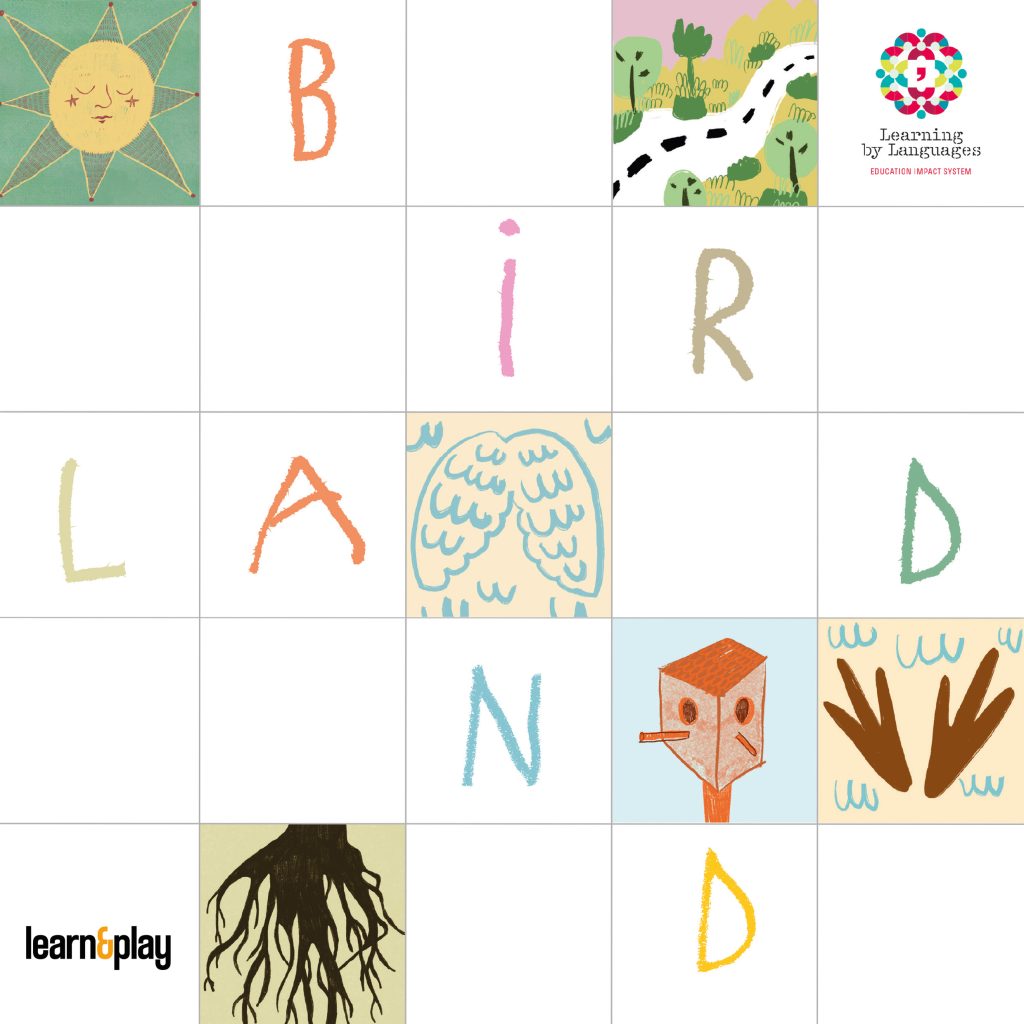
Bird Land is a learning ecosystem that brings together play, nature, and creative thinking to support the cognitive and relational development of children aged 2 to 8. Designed to integrate seamlessly into nursery, preschool, and primary school settings, it serves as a versatile tool for creating active and inclusive learning experiences. The kit includes illustrated cubes, transparent cubes, a cube with an opening for planting seeds, and characters that bring narratives to life. Through free composition, children explore different environments—sky, earth, and underground—developing constructiveness, logical thinking, and storytelling skills. Bird Land fosters both scientific and symbolic thinking, promotes a relationship with nature grounded in direct observation and biophilia, and encourages peer collaboration. It is a tool that values hands-on experience and transforms it into opportunities for inquiry, storytelling, and design. The kit also provides access to exclusive digital content: teaching units, thematic pathways, and practical activities developed according to the Learning by Languages approach, offering concrete support for teachers in their daily work.
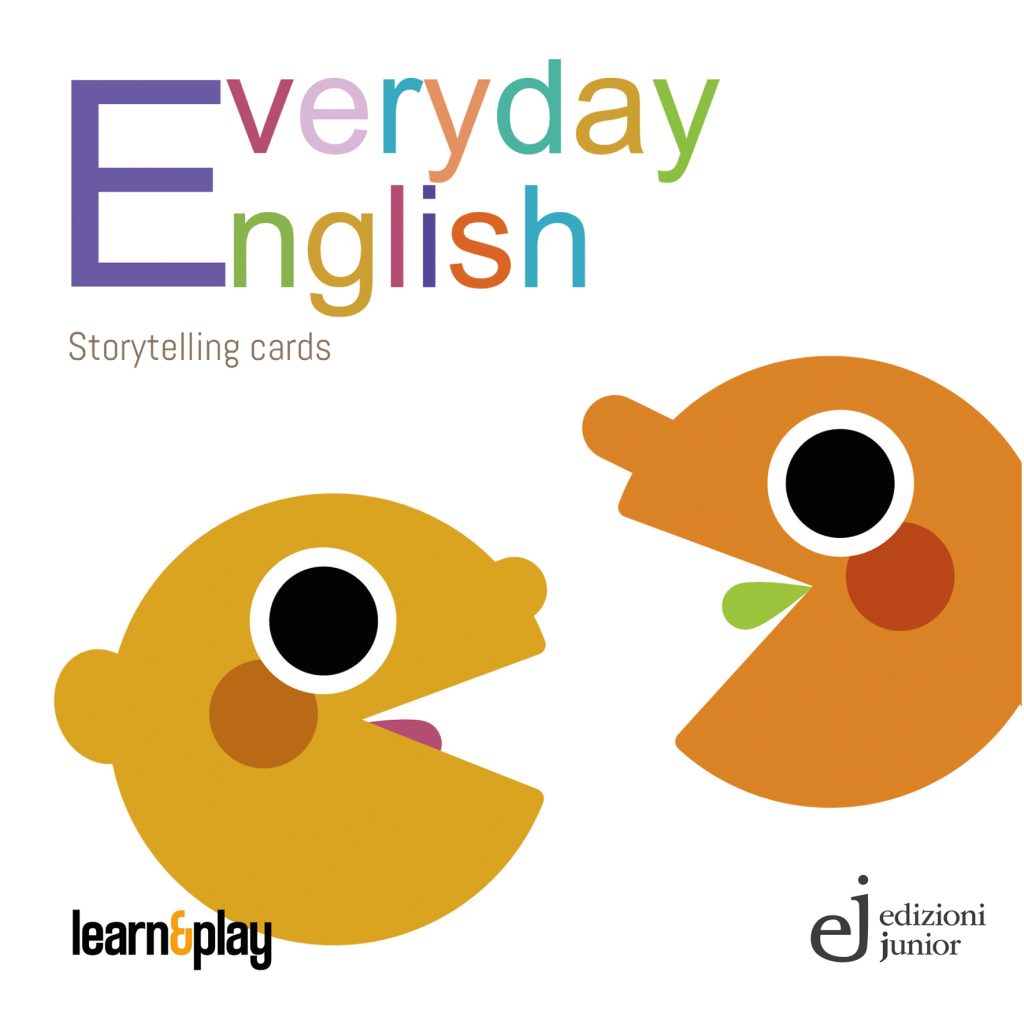
Storytelling Cards – Everyday English are designed to support children aged 2 to 8 in learning English through a narrative, active, and relational approach. Unlike traditional flashcards, they go beyond vocabulary repetition, fostering language production, symbolic play, and the shared construction of stories. Each card sparks imagination and participation, integrating English into daily school life and educational routines. The method is multisensory: listening, observation, action, and storytelling intertwine in an experience that engages body, emotions, and language. Ideal for circle time, dramatization, and workshop activities, the cards support linguistic, narrative, and relational development while promoting inclusion, collaboration, and creativity. The kit also includes access to exclusive digital content: teaching units, thematic pathways, and practical activities developed according to the Learning by Languages approach, providing concrete support for teachers in their daily work.

Get in touch

Find out how we can collaborate to build quality educational solutions.
We’re here to guide you toward tailor-made solutions.

    Which service are you interested in?

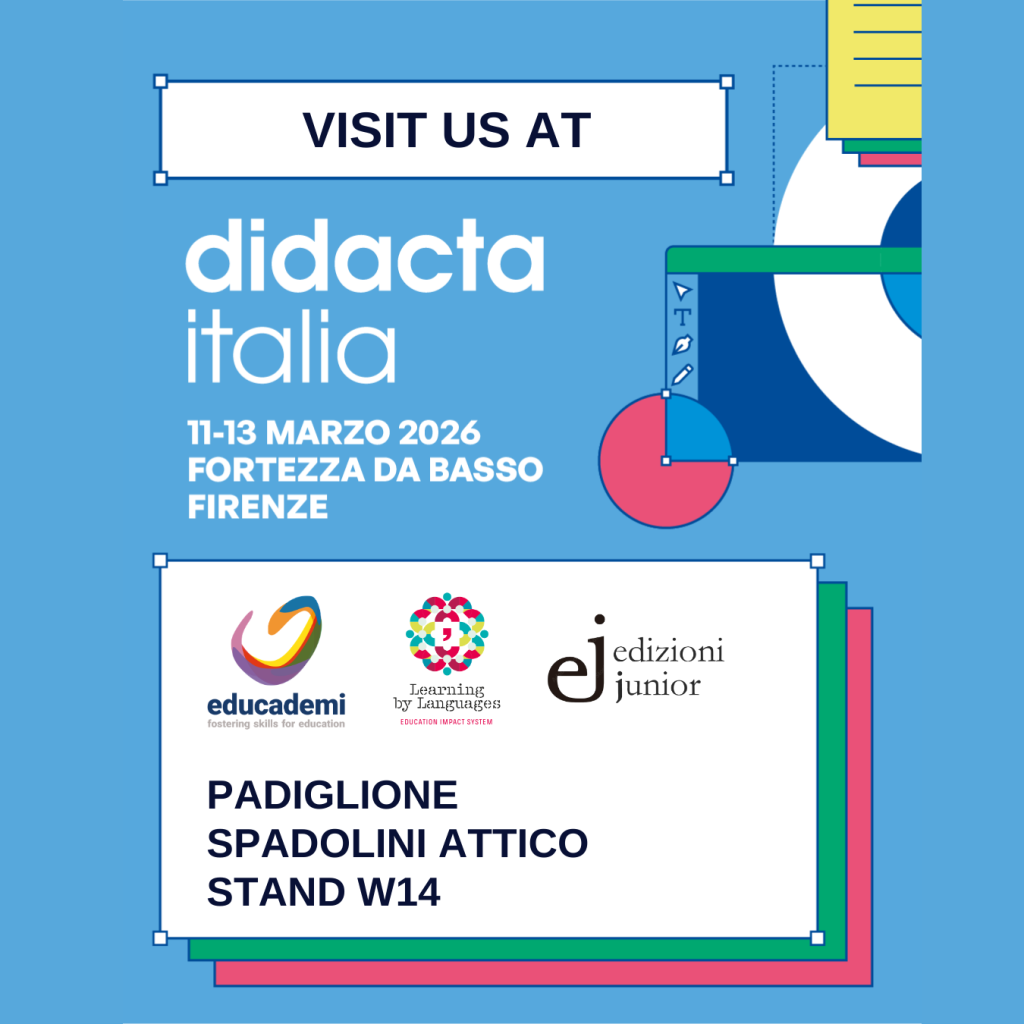
    Learning by Languages will be present at Didacta Italia 2026, from 11 to 13 March, at Stand W14 – Spadolini Attico Pavilion, together with Educademi and Edizioni Junior.